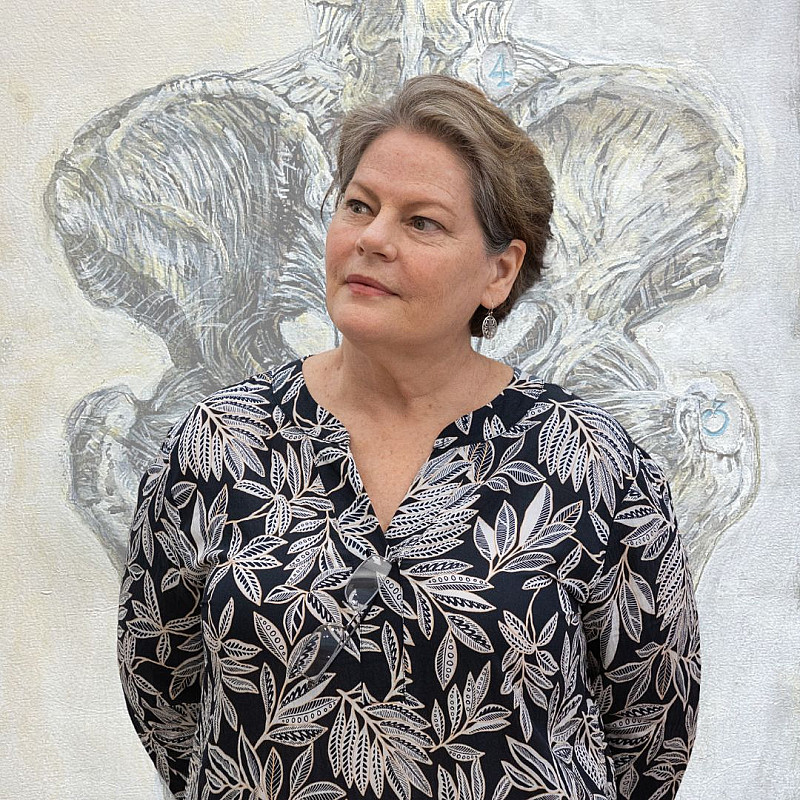
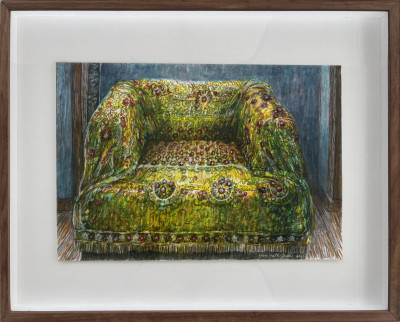
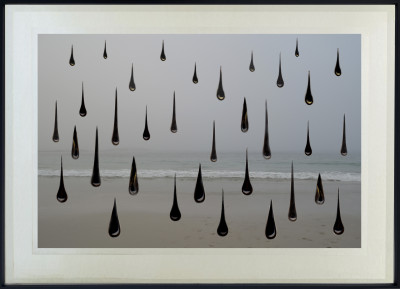
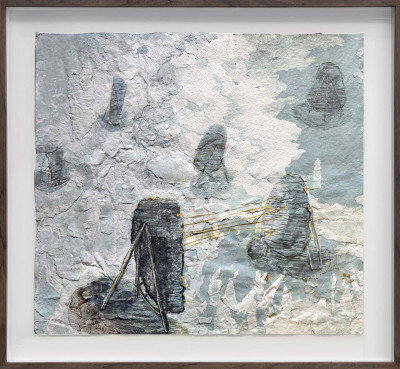
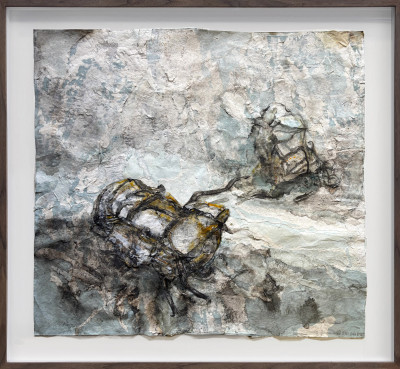
Gwenneth Miller (b. 1962, PhD Visual Arts, University of South Africa)
Gwenneth Miller was born in 1962 and grew up on a bushveld farm in the northernmost region of South Africa. Surrounded by the expansive landscapes of the Limpopo bushveld, she developed an early sensitivity to place, environment, and the sublime qualities of nature—ideas that would later become central to her artistic and academic practice. She relocated to Potchefstroom to pursue a Bachelor of Fine Arts degree during the 1980s, where she was immersed in the philosophy and aesthetics of the Neo-Romantic movement.
In the 1990s, Gwenneth continued her studies at the University of Pretoria, completing a Master of Fine Arts degree in 1997 with research focused on the aesthetics of the sublime. In the same year, she was appointed as an art lecturer at the University of South Africa (UNISA), beginning a long and distinguished career as both artist and educator. During her early years at UNISA, she initiated and participated in numerous collaborative projects across South Africa and the African continent, exploring the intersections between art, community engagement, and multimedia practice.
Among these projects were the large-scale multimedia projections for Die Verraaier (2003), performed at the Aula Theatre at the University of Pretoria, and the collaborative multimedia project Journey to Freedom Narratives (2004), presented at ZK Matthews Hall, UNISA. The latter project later travelled to several museums in the United States between 2005 and 2008, engaging rural communities, students, and alumni through shared storytelling and creative participation.
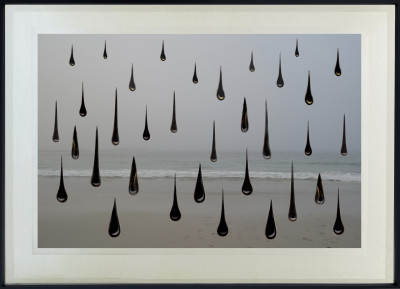
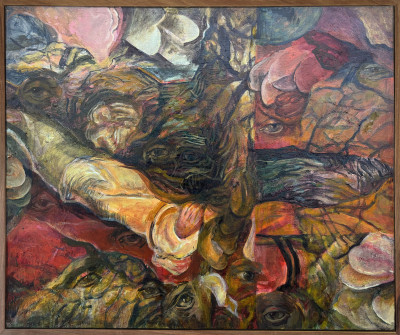
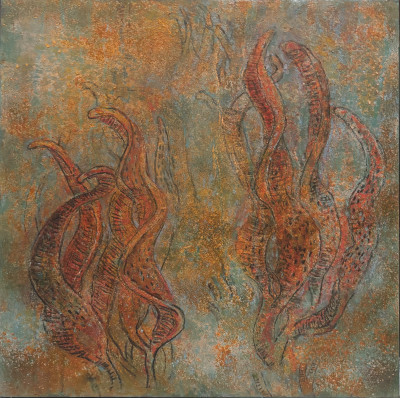
Alongside her collaborative work, Gwenneth began experimenting extensively with digital processes and interdisciplinary forms of artistic production. These interests culminated in her doctoral studies at UNISA, completed in 2015, where she undertook practice-led research into intermediality and the dialogue between visual art, digital media, and literary theory. Her research explored how meaning is generated across different media forms and was realised through painting, drawing, installation, and digital processes. This work was reflected in the major exhibition TRANSCODE: Dialogues Around Multimedia Practice (2011) at the UNISA Art Gallery, demonstrating both her scholarly and curatorial engagement with contemporary art practice.
Gwenneth is a multimedia artist, researcher, curator, and professor in the Department of Art and Music at UNISA. Described by international reviewers as “exemplary and of national and growing international standing,” her practice integrates theoretical frameworks ranging from psychoanalysis and posthumanism to material thinking and ecological philosophy. Working across two- and three-dimensional media, her art frequently explores the reciprocal relationships between people, memory, technology, and sites of mediation.
Throughout her career, Gwenneth has received numerous awards and accolades, including the Gregoire Boonzaier Prize for Painting (1983 and 1984), the FNB Gold Award for Journey to Freedom Narratives (2004), nomination as UNISA Woman of the Year for leadership and mentorship in relation to Women-in-the-Workplace (2007), the UNISA Women-in-Research Award (2012), the Creative Output Excellence Award (2021), and, in 2025, the prestigious C2 rating from the National Research Foundation (NRF) together with the UNISA Innovation and Research Trophy Award.
Gwenneth has participated in numerous national and international exhibitions, projects, and curatorial initiatives. Her works are represented in significant public and private collections including ABSA Bank, Telkom, Centurion City Council, the University of South Africa (UNISA), South African Military Health Services (SAMHS), SASOL, North-West University, Art Bank South Africa, the South African Association of Visual Artists (SANAVA), and the Pretoria Art Museum.
Through a practice that bridges artmaking, research, teaching, and curation, Gwenneth continues to contribute meaningfully to contemporary visual culture, fostering interdisciplinary dialogue while supporting and mentoring emerging generations of artists and scholars.